


Trout and Coffee
161K subscribers
WJ's "thinking places"
A pleasing confidence (from 2015)
 One of the wisest things young William James ever said, before age thirty and not long after hurdling the crisis of confidence that had him "about touch[ing] bottom" in his diary and contemplating suicide:
Notice, James didn't claim to know this. It's a "pleasing confidence," an article of faith, a repository of hope, a bootstrap to pull up on. It worked for him.
Where was James's Thinking Place? In Cambridge, MA, there was Emerson Hall where he taught his classes.

There was his longtime home at 95 Irving St.


And there was the half-mile between them that he trod daily.
His favorite Thinking Place was surely in Chocorua, N.H., to which he escaped when classes ended each summer, and where he sat on a wall and chided his Cambridge colleague, metaphysical rival, and neighbor Josiah Royce. "Damn the Absolute!" (I sat on that wall myself, in 2010.)
Followed him there, too, a step at a time. Confidence rewarded.
==
Postscript-
Where the Great Man Lived by Bob Bradford A Report on the William James Memorial 100th Anniversary Symposium, Chocorua Village, August 13-15, 2010 When William James, Harvard‟s pre-eminent and iconoclastic 19th-century pioneering psychologist, philosopher, and scholar of religion, was dying in the summer of 1910, one of his last heart-felt desires was to return to his beloved family summer residence, “Stonewall,” up on Heavenly Hill in New Hampshire‟s then-remote and still bucolic Chocorua valley. Upon arrival, he exclaimed, “It‟s so good to be home!” So, how fitting it is, in this Granite state whose motto reads “Live Free or Die,” that a 100th anniversary to commemorate the death of this philosophical giant of Free Will thinking was organized last August. This was an extraordinary four-day conference-symposium, convened and coordinated by dynamic William James Society‟s president and university professor, Paul Croce, and co-sponsored by the Chocorua Community Association, spearheaded by tireless Rev. Kent Schneider of the Chocorua Community Church. A final day of the conference concluded back in Cambridge at Harvard University‟s Houghton Library and James‟s home stomping grounds around and about the Crimson‟s campus. This long weekend symposium, charging a $100 registration fee, was titled “In The Footsteps of William James,” and designed to honor James‟s spirit for some 130 international academics, Jamesian scholars, college students, and also just plain interested philosophy neophytes, congregating in little Chocorua village from locations as far away as Oxford University, Moscow, Bologna, and Tokyo. The whole idea was to become immersed in Jamesiana, exploring places where James lived, and attending a diverse range of lecture presentations, seminars, interactive workshops, casual Socratic discussions, all with the hope of reflecting on James‟s ability to encounter experience afresh and approach problems creatively. People also were provided ample opportunity to explore the philosopher‟s natural settings, hear folk singing and cornet band performances of period music, listen to storytellers recounting James-related anecdotes, canoe and swim in his stillpristine nearby lake, and even hike up the very mountain trails that had inspired and played such an essential role in formulating a Jamesian intellectual ethos. “The intention was for this to be a public event that could bring academics and regular citizens together to hear about William James‟s life and theories, and evaluate continuing uses of his ideas for our time,” explains conference coordinator Professor Paul Croce, speaking from his Stetson University American Studies offices down in Florida. “To me, two of James‟s most important teachings for today is, first, his deep commitment to liberal arts education as a key essential to democracy---in other words providing a mental map of learning as a key to good citizenship. Secondly, he had a simply remarkable mediating mind that presents key ways to cope with extreme polarizations in our society, including truly listening to others and grasping different points of view. “Bottom line is he was an incredibly wise dude,” Croce emphasizes, “and whatever he‟s singing about, we‟d do well to listen up, today.” Croce adds enthusiastically that, according to just about everyone who attended the symposium, Chocorua did indeed live up to highest expectations as “the perfect place” for this conference. “What we were trying to achieve with this was to let James‟s thinking resonate out to communities at large, well beyond academic circles. And here everyone found a locale with great charm, unpretentious warm and accommodating places for lodging and meals like the Lazy Dog, Riverbend Inn, Gilman Tavern, Whittier House, everything so welcoming and friendly. There was also a true appeal for both mind and body throughout the whole weekend, as well. It‟s exactly the way James himself would have wanted it. I can‟t tell you how many people were just raving about the whole laid-back informality of it all, how persuasive it all was, how refreshing and lovely the entire community experience.” Agrees Harvard Magazine associate editor-feature writer, Craig Lambert, who journeyed up from Cambridge for the weekend, “Academic conferences are too often confined to airless rooms where participants engage the subject at hand on a purely intellectual, cerebral basis. William James was not that kind of scholar, and this was in no way that kind of an encounter. “We were able to enjoy the lake and the mountains that meant so much to him, and get a feel for the village where he passed so many happy summer months, and even, thanks to the current owners, to tour the inside of his dwelling, as well as his barn and surrounding property. We listened to James music, stories, saw galleries of historic photographs and memorabilia from the James era. What I came away with was a much more rounded sense of who William James was, not only as a philosopher and psychologist, but as a man.” Internationally celebrated Harvard astrophysicist-turned-teacher of philosophy, Robert Doyle, echoes Lambert‟s thought. Doyle was one of the showcase speakers up for the symposium, championing James theories about Free Will and changeable destiny vs. the staunch beliefs in hide-bound determinism, where everything in life is already scripted and never subject to chance. “It was the location factor for this conference that had the greatest impact on my psyche,” Doyle says. “I‟m an historically oriented thinker, and I can‟t tell you the number of philosophers I‟ve studied going back before Aristotle, and studied them in 12 different languages” he observes. “So, visiting this intimate home site venue has provided me a profound new James connection. “In the spirit of hermeneutics, I guess you could call me a „hermenaut,‟” he goes on, with a dry chuckle. A what, we ask? Doyle laughs and explains this is a kind of word-play he coined on the space exploration astronaut idea, “only my hermenaut is an explorer who‟s traveling backwards in time to literally put himself back into the environment of a given philosopher. You‟ve almost got to put on those same shoes the thinker was wearing to understand his work. “So, in this case, here was William James in the later 19th century,” Doyle continues, “when determinism was the order of the day, everything in God‟s hands, neatly programmed, pre-ordained, so very Victorian. But this great man was able to break free from all that. Somehow, he had the independence of mind and courage to break away. He was the first, if not the only, philosopher of his era to do so.” Consider the grasp of this phenomenal achievement. And here we are in Chocorua, the very dead-center of where so much of this unprecedented, ground-breaking, independent philosophic freedom of thought was really created, Doyle emphasizes. Maybe it was a brain storm that occurred while swimming on his back, floating free, suspended and weightless, gazing up at that ruggedly independent, majestic granite peak, as Doyle himself had just done this morning. Maybe major inspirations took shape while gazing at these White Mountain silhouettes of the whole Sandwich range during a long, lingering, glorious Chocorua sunset, like the spectacular free-form, ever-changing color show Doyle had witnessed just last night. “Who knows exactly what all the inspirations were?” Doyle muses aloud. “But being here and experiencing James‟s Chocorua firsthand has been indescribably exciting for a hermenaut like me.”
- http://web.mit.edu/~slanou/www/shared_documents/CLA_Fall_2010_Newsletter.pdf
==
Post-postscript. Not quite the way it was originally...


slideshow, 1434 Chocorua Mt Hwy...
http://www.movoto.com/chocorua-nh/1434-chocorua-mt-hwy-chocorua-nh-03817-890_4504819/for-sale/
One of the wisest things young William James ever said, before age thirty and not long after hurdling the crisis of confidence that had him "about touch[ing] bottom" in his diary and contemplating suicide:It is a pleasing confidence that... by working our stint day by day on the one line we have chosen, without looking ahead or thinking much of the final result, we are sure of waking some fine morning, experts in our particular branch, with a tact, so to speak for truth therein: a judgment, and ideas and intuitions of our own - all there without our knowing exactly how they came. (April 8, 1871, cited in Robert Richardson's bio)Put in the hours and days, and the years and career will take care of themselves. Lay down the right habits of work and routine, and eventually you may expect to soar like those skimming Amazon gulls. Or at least you'll figure a few things out, maybe even publish a book or a few. As Annie Dillard said (and as Maria Popova never tires of repeating), how we spend our days is how we spend our lives. A step at a time.
Notice, James didn't claim to know this. It's a "pleasing confidence," an article of faith, a repository of hope, a bootstrap to pull up on. It worked for him.
Where was James's Thinking Place? In Cambridge, MA, there was Emerson Hall where he taught his classes.
There was his longtime home at 95 Irving St.
And there was the half-mile between them that he trod daily.
His favorite Thinking Place was surely in Chocorua, N.H., to which he escaped when classes ended each summer, and where he sat on a wall and chided his Cambridge colleague, metaphysical rival, and neighbor Josiah Royce. "Damn the Absolute!" (I sat on that wall myself, in 2010.)
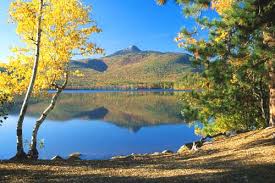
And his favorite spot in Chocorua had to be the mountain across the road.
==
Postscript-
Where the Great Man Lived by Bob Bradford A Report on the William James Memorial 100th Anniversary Symposium, Chocorua Village, August 13-15, 2010 When William James, Harvard‟s pre-eminent and iconoclastic 19th-century pioneering psychologist, philosopher, and scholar of religion, was dying in the summer of 1910, one of his last heart-felt desires was to return to his beloved family summer residence, “Stonewall,” up on Heavenly Hill in New Hampshire‟s then-remote and still bucolic Chocorua valley. Upon arrival, he exclaimed, “It‟s so good to be home!” So, how fitting it is, in this Granite state whose motto reads “Live Free or Die,” that a 100th anniversary to commemorate the death of this philosophical giant of Free Will thinking was organized last August. This was an extraordinary four-day conference-symposium, convened and coordinated by dynamic William James Society‟s president and university professor, Paul Croce, and co-sponsored by the Chocorua Community Association, spearheaded by tireless Rev. Kent Schneider of the Chocorua Community Church. A final day of the conference concluded back in Cambridge at Harvard University‟s Houghton Library and James‟s home stomping grounds around and about the Crimson‟s campus. This long weekend symposium, charging a $100 registration fee, was titled “In The Footsteps of William James,” and designed to honor James‟s spirit for some 130 international academics, Jamesian scholars, college students, and also just plain interested philosophy neophytes, congregating in little Chocorua village from locations as far away as Oxford University, Moscow, Bologna, and Tokyo. The whole idea was to become immersed in Jamesiana, exploring places where James lived, and attending a diverse range of lecture presentations, seminars, interactive workshops, casual Socratic discussions, all with the hope of reflecting on James‟s ability to encounter experience afresh and approach problems creatively. People also were provided ample opportunity to explore the philosopher‟s natural settings, hear folk singing and cornet band performances of period music, listen to storytellers recounting James-related anecdotes, canoe and swim in his stillpristine nearby lake, and even hike up the very mountain trails that had inspired and played such an essential role in formulating a Jamesian intellectual ethos. “The intention was for this to be a public event that could bring academics and regular citizens together to hear about William James‟s life and theories, and evaluate continuing uses of his ideas for our time,” explains conference coordinator Professor Paul Croce, speaking from his Stetson University American Studies offices down in Florida. “To me, two of James‟s most important teachings for today is, first, his deep commitment to liberal arts education as a key essential to democracy---in other words providing a mental map of learning as a key to good citizenship. Secondly, he had a simply remarkable mediating mind that presents key ways to cope with extreme polarizations in our society, including truly listening to others and grasping different points of view. “Bottom line is he was an incredibly wise dude,” Croce emphasizes, “and whatever he‟s singing about, we‟d do well to listen up, today.” Croce adds enthusiastically that, according to just about everyone who attended the symposium, Chocorua did indeed live up to highest expectations as “the perfect place” for this conference. “What we were trying to achieve with this was to let James‟s thinking resonate out to communities at large, well beyond academic circles. And here everyone found a locale with great charm, unpretentious warm and accommodating places for lodging and meals like the Lazy Dog, Riverbend Inn, Gilman Tavern, Whittier House, everything so welcoming and friendly. There was also a true appeal for both mind and body throughout the whole weekend, as well. It‟s exactly the way James himself would have wanted it. I can‟t tell you how many people were just raving about the whole laid-back informality of it all, how persuasive it all was, how refreshing and lovely the entire community experience.” Agrees Harvard Magazine associate editor-feature writer, Craig Lambert, who journeyed up from Cambridge for the weekend, “Academic conferences are too often confined to airless rooms where participants engage the subject at hand on a purely intellectual, cerebral basis. William James was not that kind of scholar, and this was in no way that kind of an encounter. “We were able to enjoy the lake and the mountains that meant so much to him, and get a feel for the village where he passed so many happy summer months, and even, thanks to the current owners, to tour the inside of his dwelling, as well as his barn and surrounding property. We listened to James music, stories, saw galleries of historic photographs and memorabilia from the James era. What I came away with was a much more rounded sense of who William James was, not only as a philosopher and psychologist, but as a man.” Internationally celebrated Harvard astrophysicist-turned-teacher of philosophy, Robert Doyle, echoes Lambert‟s thought. Doyle was one of the showcase speakers up for the symposium, championing James theories about Free Will and changeable destiny vs. the staunch beliefs in hide-bound determinism, where everything in life is already scripted and never subject to chance. “It was the location factor for this conference that had the greatest impact on my psyche,” Doyle says. “I‟m an historically oriented thinker, and I can‟t tell you the number of philosophers I‟ve studied going back before Aristotle, and studied them in 12 different languages” he observes. “So, visiting this intimate home site venue has provided me a profound new James connection. “In the spirit of hermeneutics, I guess you could call me a „hermenaut,‟” he goes on, with a dry chuckle. A what, we ask? Doyle laughs and explains this is a kind of word-play he coined on the space exploration astronaut idea, “only my hermenaut is an explorer who‟s traveling backwards in time to literally put himself back into the environment of a given philosopher. You‟ve almost got to put on those same shoes the thinker was wearing to understand his work. “So, in this case, here was William James in the later 19th century,” Doyle continues, “when determinism was the order of the day, everything in God‟s hands, neatly programmed, pre-ordained, so very Victorian. But this great man was able to break free from all that. Somehow, he had the independence of mind and courage to break away. He was the first, if not the only, philosopher of his era to do so.” Consider the grasp of this phenomenal achievement. And here we are in Chocorua, the very dead-center of where so much of this unprecedented, ground-breaking, independent philosophic freedom of thought was really created, Doyle emphasizes. Maybe it was a brain storm that occurred while swimming on his back, floating free, suspended and weightless, gazing up at that ruggedly independent, majestic granite peak, as Doyle himself had just done this morning. Maybe major inspirations took shape while gazing at these White Mountain silhouettes of the whole Sandwich range during a long, lingering, glorious Chocorua sunset, like the spectacular free-form, ever-changing color show Doyle had witnessed just last night. “Who knows exactly what all the inspirations were?” Doyle muses aloud. “But being here and experiencing James‟s Chocorua firsthand has been indescribably exciting for a hermenaut like me.”
- http://web.mit.edu/~slanou/www/shared_documents/CLA_Fall_2010_Newsletter.pdf
==
Post-postscript. Not quite the way it was originally...
slideshow, 1434 Chocorua Mt Hwy...
http://www.movoto.com/chocorua-nh/1434-chocorua-mt-hwy-chocorua-nh-03817-890_4504819/for-sale/


